高考英语七选五真题及答案解析

高考英语七选五真题专题,共 23 道真实高考题,覆盖 10 个年份、11 套试卷;含高频解法、常见易错点、难度分布与答案解析。

23past questions
10个年份
11papers

这个题型怎么考

难度分布:区分题 23 questions

近年真题分布

20265 questions
20255 questions
20231 questions
20212 questions
20142 questions
20131 questions
20123 questions
20111 questions

历年七选五真题

2026 National Question 36 Single-choice Differentiating
2026_新课标I Paper

36. ## 第二节(共 5小题;每小题 2.5分,满分12.5 分)

阅读下面短文,从短文后的选项中选出可以填入空白处的最佳选项。选项中有两个选项是多余的。

Museums, once silent halls of the past, are now using artificial intelligence (AI) in surprising ways. Walk into many modern galleries today and an AI-powered guide can chat with you, answer your questions, and share fascinating stories about the works on display. 36

The ways in which AI assists visitors are truly surprising. 37 Virtual guides can respond in dozens of languages and adjust their tone to suit each listener, whether a young student or a lifelong art lover. They make every visit feel personal.

AI can also examine artworks in fine detail, far beyond what is possible with human eyes. 38 Moreover, it can predict how a fragile painting may age over the years, allowing experts to step in before any visible damage appears.

Beyond preservation, AI creates tailored experiences for individual visitors and their families. 39 For instance, a curious child and a trained art expert standing before the same painting might each receive a completely different guided tour.

Yet the growing use of AI also raises concerns. These systems depend on collecting vast amounts of personal information through their data-driven algorithms. 40 Strict rules are therefore needed to ensure that every visitor’s privacy is fully protected.

A. These capabilities make AI a powerful tool for art restoration.
B. Visitor data, if misused, could lead to serious privacy issues.
C. In short, AI is changing the museum experience in many respects.
D. It tailors recommendations to different ages and learning styles.
E. Museums have always been important places for learning.
F. Furthermore, AI chatbots are replacing traditional audio guides.
G. AI is also used to design more attractive exhibits.
Answer key

C

2026 National Question 37 Single-choice Differentiating
2026_新课标I Paper

37. ## 第二节(共 5小题;每小题 2.5分,满分12.5 分)

阅读下面短文,从短文后的选项中选出可以填入空白处的最佳选项。选项中有两个选项是多余的。

Museums, once silent halls of the past, are now using artificial intelligence (AI) in surprising ways. Walk into many modern galleries today and an AI-powered guide can chat with you, answer your questions, and share fascinating stories about the works on display. 36

The ways in which AI assists visitors are truly surprising. 37 Virtual guides can respond in dozens of languages and adjust their tone to suit each listener, whether a young student or a lifelong art lover. They make every visit feel personal.

AI can also examine artworks in fine detail, far beyond what is possible with human eyes. 38 Moreover, it can predict how a fragile painting may age over the years, allowing experts to step in before any visible damage appears.

Beyond preservation, AI creates tailored experiences for individual visitors and their families. 39 For instance, a curious child and a trained art expert standing before the same painting might each receive a completely different guided tour.

Yet the growing use of AI also raises concerns. These systems depend on collecting vast amounts of personal information through their data-driven algorithms. 40 Strict rules are therefore needed to ensure that every visitor’s privacy is fully protected.

A. These capabilities make AI a powerful tool for art restoration.
B. Visitor data, if misused, could lead to serious privacy issues.
C. In short, AI is changing the museum experience in many respects.
D. It tailors recommendations to different ages and learning styles.
E. Museums have always been important places for learning.
F. Furthermore, AI chatbots are replacing traditional audio guides.
G. AI is also used to design more attractive exhibits.
Answer key

F

2026 National Question 38 Single-choice Differentiating
2026_新课标I Paper

38. ## 第二节(共 5小题;每小题 2.5分,满分12.5 分)

阅读下面短文,从短文后的选项中选出可以填入空白处的最佳选项。选项中有两个选项是多余的。

Museums, once silent halls of the past, are now using artificial intelligence (AI) in surprising ways. Walk into many modern galleries today and an AI-powered guide can chat with you, answer your questions, and share fascinating stories about the works on display. 36

The ways in which AI assists visitors are truly surprising. 37 Virtual guides can respond in dozens of languages and adjust their tone to suit each listener, whether a young student or a lifelong art lover. They make every visit feel personal.

AI can also examine artworks in fine detail, far beyond what is possible with human eyes. 38 Moreover, it can predict how a fragile painting may age over the years, allowing experts to step in before any visible damage appears.

Beyond preservation, AI creates tailored experiences for individual visitors and their families. 39 For instance, a curious child and a trained art expert standing before the same painting might each receive a completely different guided tour.

Yet the growing use of AI also raises concerns. These systems depend on collecting vast amounts of personal information through their data-driven algorithms. 40 Strict rules are therefore needed to ensure that every visitor’s privacy is fully protected.

A. These capabilities make AI a powerful tool for art restoration.
B. Visitor data, if misused, could lead to serious privacy issues.
C. In short, AI is changing the museum experience in many respects.
D. It tailors recommendations to different ages and learning styles.
E. Museums have always been important places for learning.
F. Furthermore, AI chatbots are replacing traditional audio guides.
G. AI is also used to design more attractive exhibits.
Answer key

A

2026 National Question 39 Single-choice Differentiating
2026_新课标I Paper

39. ## 第二节(共 5小题;每小题 2.5分,满分12.5 分)

阅读下面短文,从短文后的选项中选出可以填入空白处的最佳选项。选项中有两个选项是多余的。

Museums, once silent halls of the past, are now using artificial intelligence (AI) in surprising ways. Walk into many modern galleries today and an AI-powered guide can chat with you, answer your questions, and share fascinating stories about the works on display. 36

The ways in which AI assists visitors are truly surprising. 37 Virtual guides can respond in dozens of languages and adjust their tone to suit each listener, whether a young student or a lifelong art lover. They make every visit feel personal.

AI can also examine artworks in fine detail, far beyond what is possible with human eyes. 38 Moreover, it can predict how a fragile painting may age over the years, allowing experts to step in before any visible damage appears.

Beyond preservation, AI creates tailored experiences for individual visitors and their families. 39 For instance, a curious child and a trained art expert standing before the same painting might each receive a completely different guided tour.

Yet the growing use of AI also raises concerns. These systems depend on collecting vast amounts of personal information through their data-driven algorithms. 40 Strict rules are therefore needed to ensure that every visitor’s privacy is fully protected.

A. These capabilities make AI a powerful tool for art restoration.
B. Visitor data, if misused, could lead to serious privacy issues.
C. In short, AI is changing the museum experience in many respects.
D. It tailors recommendations to different ages and learning styles.
E. Museums have always been important places for learning.
F. Furthermore, AI chatbots are replacing traditional audio guides.
G. AI is also used to design more attractive exhibits.
Answer key

D

2026 National Question 40 Single-choice Differentiating
2026_新课标I Paper

40. ## 第二节(共 5小题;每小题 2.5分,满分12.5 分)

阅读下面短文,从短文后的选项中选出可以填入空白处的最佳选项。选项中有两个选项是多余的。

Museums, once silent halls of the past, are now using artificial intelligence (AI) in surprising ways. Walk into many modern galleries today and an AI-powered guide can chat with you, answer your questions, and share fascinating stories about the works on display. 36

The ways in which AI assists visitors are truly surprising. 37 Virtual guides can respond in dozens of languages and adjust their tone to suit each listener, whether a young student or a lifelong art lover. They make every visit feel personal.

AI can also examine artworks in fine detail, far beyond what is possible with human eyes. 38 Moreover, it can predict how a fragile painting may age over the years, allowing experts to step in before any visible damage appears.

Beyond preservation, AI creates tailored experiences for individual visitors and their families. 39 For instance, a curious child and a trained art expert standing before the same painting might each receive a completely different guided tour.

Yet the growing use of AI also raises concerns. These systems depend on collecting vast amounts of personal information through their data-driven algorithms. 40 Strict rules are therefore needed to ensure that every visitor’s privacy is fully protected.

A. These capabilities make AI a powerful tool for art restoration.
B. Visitor data, if misused, could lead to serious privacy issues.
C. In short, AI is changing the museum experience in many respects.
D. It tailors recommendations to different ages and learning styles.
E. Museums have always been important places for learning.
F. Furthermore, AI chatbots are replacing traditional audio guides.
G. AI is also used to design more attractive exhibits.
Answer key

B

2025 浙江(1月首考) Question 36 Single-choice Differentiating
2025_浙江 1 月首考

36. ## 第二节(共 5 小题;每小题 2.5 分,满分 12.5 分)

阅读下面短文,从短文后的选项中选出能填入空白处的最佳选项。选项中有两项为多余选项。

$One of the most common mistakes in communication is trying to do too much. \_\_\_36\_\_\_ There$’s no value in delivering any kind of communication, whether written, spoken, formal, or informal, if the message doesn’t come across clearly. Being clear and brief — while maintaining interest and including everything your listeners need to know — is a high-level communication skill.

Here are some tips worth following in order to communicate more effectively.

 Keep your audience in mind.

$Your audience will naturally be more interested and engaged when you tailor your communications to their interests. \_\_\_37\_\_\_ This will engage their desire to understand and interact with the information.$

 Don’t use ten words when one will do.

$Even the most engaged and committed audience will eventually get bored. Keeping your message simple and clear will make it easier for people to understand. \_\_\_38\_\_\_ However, they$’re hearing it for the first time. Keep it simple.

 $\_\_\_39\_\_\_$

If you’ve ever worked as an instructor, manager, trainer or coach, you’ll know that there are few better ways to learn new information than to teach it. Ask the audience to contribute their ideas or to take a role in explaining new concepts and policies to others. Allow them to lead discussions and meetings to develop their communication skills.

 Consider the best method to deliver your message.

If the information you’re communicating isn’$t urgent, consider sending an email. Written communication will give your audience more time to review it, think it over, and follow up with questions. \_\_\_40\_$

Building effective communication skills takes time, but the effects are worth the effort.

A. Be patient.
B. Get the audience involved.
C. The best messages are often simple.
D. Speak directly to what matters to them.
E. You may be surprised by what your listeners offer.
F. It will also give them a handy record to refer back to.
G. As the speaker, you already know what you’re going to say.
Answer key

C

2025 浙江(1月首考) Question 37 Single-choice Differentiating
2025_浙江 1 月首考

37. ## 第二节(共 5 小题;每小题 2.5 分,满分 12.5 分)

阅读下面短文,从短文后的选项中选出能填入空白处的最佳选项。选项中有两项为多余选项。

$One of the most common mistakes in communication is trying to do too much. \_\_\_36\_\_\_ There$’s no value in delivering any kind of communication, whether written, spoken, formal, or informal, if the message doesn’t come across clearly. Being clear and brief — while maintaining interest and including everything your listeners need to know — is a high-level communication skill.

Here are some tips worth following in order to communicate more effectively.

 Keep your audience in mind.

$Your audience will naturally be more interested and engaged when you tailor your communications to their interests. \_\_\_37\_\_\_ This will engage their desire to understand and interact with the information.$

 Don’t use ten words when one will do.

$Even the most engaged and committed audience will eventually get bored. Keeping your message simple and clear will make it easier for people to understand. \_\_\_38\_\_\_ However, they$’re hearing it for the first time. Keep it simple.

 $\_\_\_39\_\_\_$

If you’ve ever worked as an instructor, manager, trainer or coach, you’ll know that there are few better ways to learn new information than to teach it. Ask the audience to contribute their ideas or to take a role in explaining new concepts and policies to others. Allow them to lead discussions and meetings to develop their communication skills.

 Consider the best method to deliver your message.

If the information you’re communicating isn’$t urgent, consider sending an email. Written communication will give your audience more time to review it, think it over, and follow up with questions. \_\_\_40\_$

Building effective communication skills takes time, but the effects are worth the effort.

A. Be patient.
B. Get the audience involved.
C. The best messages are often simple.
D. Speak directly to what matters to them.
E. You may be surprised by what your listeners offer.
F. It will also give them a handy record to refer back to.
G. As the speaker, you already know what you’re going to say.
Answer key

D

2025 浙江(1月首考) Question 38 Single-choice Differentiating
2025_浙江 1 月首考

38. ## 第二节(共 5 小题;每小题 2.5 分,满分 12.5 分)

阅读下面短文,从短文后的选项中选出能填入空白处的最佳选项。选项中有两项为多余选项。

$One of the most common mistakes in communication is trying to do too much. \_\_\_36\_\_\_ There$’s no value in delivering any kind of communication, whether written, spoken, formal, or informal, if the message doesn’t come across clearly. Being clear and brief — while maintaining interest and including everything your listeners need to know — is a high-level communication skill.

Here are some tips worth following in order to communicate more effectively.

 Keep your audience in mind.

$Your audience will naturally be more interested and engaged when you tailor your communications to their interests. \_\_\_37\_\_\_ This will engage their desire to understand and interact with the information.$

 Don’t use ten words when one will do.

$Even the most engaged and committed audience will eventually get bored. Keeping your message simple and clear will make it easier for people to understand. \_\_\_38\_\_\_ However, they$’re hearing it for the first time. Keep it simple.

 $\_\_\_39\_\_\_$

If you’ve ever worked as an instructor, manager, trainer or coach, you’ll know that there are few better ways to learn new information than to teach it. Ask the audience to contribute their ideas or to take a role in explaining new concepts and policies to others. Allow them to lead discussions and meetings to develop their communication skills.

 Consider the best method to deliver your message.

If the information you’re communicating isn’$t urgent, consider sending an email. Written communication will give your audience more time to review it, think it over, and follow up with questions. \_\_\_40\_$

Building effective communication skills takes time, but the effects are worth the effort.

A. Be patient.
B. Get the audience involved.
C. The best messages are often simple.
D. Speak directly to what matters to them.
E. You may be surprised by what your listeners offer.
F. It will also give them a handy record to refer back to.
G. As the speaker, you already know what you’re going to say.
Answer key

G

2025 浙江(1月首考) Question 39 Single-choice Differentiating
2025_浙江 1 月首考

39. ## 第二节(共 5 小题;每小题 2.5 分,满分 12.5 分)

阅读下面短文,从短文后的选项中选出能填入空白处的最佳选项。选项中有两项为多余选项。

$One of the most common mistakes in communication is trying to do too much. \_\_\_36\_\_\_ There$’s no value in delivering any kind of communication, whether written, spoken, formal, or informal, if the message doesn’t come across clearly. Being clear and brief — while maintaining interest and including everything your listeners need to know — is a high-level communication skill.

Here are some tips worth following in order to communicate more effectively.

 Keep your audience in mind.

$Your audience will naturally be more interested and engaged when you tailor your communications to their interests. \_\_\_37\_\_\_ This will engage their desire to understand and interact with the information.$

 Don’t use ten words when one will do.

$Even the most engaged and committed audience will eventually get bored. Keeping your message simple and clear will make it easier for people to understand. \_\_\_38\_\_\_ However, they$’re hearing it for the first time. Keep it simple.

 $\_\_\_39\_\_\_$

If you’ve ever worked as an instructor, manager, trainer or coach, you’ll know that there are few better ways to learn new information than to teach it. Ask the audience to contribute their ideas or to take a role in explaining new concepts and policies to others. Allow them to lead discussions and meetings to develop their communication skills.

 Consider the best method to deliver your message.

If the information you’re communicating isn’$t urgent, consider sending an email. Written communication will give your audience more time to review it, think it over, and follow up with questions. \_\_\_40\_$

Building effective communication skills takes time, but the effects are worth the effort.

A. Be patient.
B. Get the audience involved.
C. The best messages are often simple.
D. Speak directly to what matters to them.
E. You may be surprised by what your listeners offer.
F. It will also give them a handy record to refer back to.
G. As the speaker, you already know what you’re going to say.
Answer key

B

2025 浙江(1月首考) Question 40 Single-choice Differentiating
2025_浙江 1 月首考

40. ## 第二节(共 5 小题;每小题 2.5 分,满分 12.5 分)

阅读下面短文,从短文后的选项中选出能填入空白处的最佳选项。选项中有两项为多余选项。

$One of the most common mistakes in communication is trying to do too much. \_\_\_36\_\_\_ There$’s no value in delivering any kind of communication, whether written, spoken, formal, or informal, if the message doesn’t come across clearly. Being clear and brief — while maintaining interest and including everything your listeners need to know — is a high-level communication skill.

Here are some tips worth following in order to communicate more effectively.

 Keep your audience in mind.

$Your audience will naturally be more interested and engaged when you tailor your communications to their interests. \_\_\_37\_\_\_ This will engage their desire to understand and interact with the information.$

 Don’t use ten words when one will do.

$Even the most engaged and committed audience will eventually get bored. Keeping your message simple and clear will make it easier for people to understand. \_\_\_38\_\_\_ However, they$’re hearing it for the first time. Keep it simple.

 $\_\_\_39\_\_\_$

If you’ve ever worked as an instructor, manager, trainer or coach, you’ll know that there are few better ways to learn new information than to teach it. Ask the audience to contribute their ideas or to take a role in explaining new concepts and policies to others. Allow them to lead discussions and meetings to develop their communication skills.

 Consider the best method to deliver your message.

If the information you’re communicating isn’$t urgent, consider sending an email. Written communication will give your audience more time to review it, think it over, and follow up with questions. \_\_\_40\_$

Building effective communication skills takes time, but the effects are worth the effort.

A. Be patient.
B. Get the audience involved.
C. The best messages are often simple.
D. Speak directly to what matters to them.
E. You may be surprised by what your listeners offer.
F. It will also give them a handy record to refer back to.
G. As the speaker, you already know what you’re going to say.
Answer key

F

2023 National Question 40 Single-choice Differentiating
2023_新课标I Paper

40. ## 第二节 (共 5 小题; 每小题 2.5 分, 满分 12.5 分)

阅读下面短文,从短文后的选项中选出可以填入空白处的最佳选项。选项中有两项为多余选项。

Personal Forgiveness

Taking responsibility for mistakes is a positive step, but don't beat yourself up about them. To err (犯错) $is human. \_36\_ You can use the following writing exercise to help you do this.$

In a journal or on a piece of paper, put the heading “Personal strengths.” $\_\_\_\_37\_\_\_\_ Are you caring$? Creative? Generous? A good listener? Fun to be around? They don’t have to be world-changing, just aspects of your personality that you’re proud of.

At the top of a second page, put the heading “Acts of kindness.” On this one, list all the positive things you’$ve done for others. It might be the time when you helped a friend with their homework, when you did the ironing without being asked, or when you baked cookies after the family had had a tiring day. \_\_\_\_38\_\_\_\_$

$You could ask a friend or family member to help add to your list. \_39\_ That way, you could exchange thoughts on what makes each of you special and the aspects of your personality that shine through. In fact, don$'t wait until you've made a mistake to try this — it's a great way to boost self-confidence at any time.

It's something of a cliché (陈词滥调) that most people learn not from their successes but their mistakes. The thing is, it'$s true. \_40\_ We$'re all changing and learning all the time and mistakes are a positive way to develop and grow.

A. A little self-forgiveness also goes a long way.
B. Now list all the characteristics you like about yourself.
C. They might even like to have a go at doing the exercise.
D. It's just as important to show yourself some forgiveness.
E. It doesn't mean you have to ignore what's happened or forget it.
F. Whatever it is, no matter how small it might seem, write it down.
G. Whatever the mistake, remember it isn't a fixed aspect of your personality.
Answer key

40. G

2021 Shanghai Question 12 Free-response Differentiating
2021_上海卷 (英语)

12. (1)A.A search engine developed by a library.
B.An introduction to the Pearl Library.
C.A person﹣to﹣person information service.
D.Changes that search engines bring to us.
(2)A.It may give you a large number of results.
B.It may cause your computer to break down.
C.It will provide unreliable information.
D.It will take a long time to show the answers.
(3)A.It recommends what to read when you miss key information.
B.It offers a satisfactory answer even to a vague question.

C.It teaches you how to look for information.
D.It is accessible for 9 hours 7 days a week.

Answer key

B A B

2021 Shanghai Question 20 Multiple-choice Differentiating
2021_上海卷 (英语)

19. At a conference on self﹣driving cars,Mike Harp,a government official,asked a
seemingly simple question about what happens when his own car meets a driverless vehicle."If
I honk(按喇叭) ,will it do any good?"Harp wanted to know.Unfortunately,manufacturers
didn't have an answer."We haven't reached that point of deciding how and whether it would be
appropriate for vehicles to react and in which way to honking,"said one of them.The brief
exchange highlights a thorn in the side of automakers and policymakers alike:Self﹣driving
cars will have to share the road with human drivers,likely for decades to come.Those vehicles
must therefore respond and adapt to the peculiarities and mistakes of humans behind the wheel.
Self﹣driving technology has already come a long way.Cars being tested on the road today
use cameras and radar,for example,to detect the movements of nearby cyclists and
pedestrians.There are already driver﹣assist technologies built into some cars that monitor the
speed of vehicles around you,detect potential accidents before they occur,and automatically slow
or stop the car to avoid a wreck.In a world where all cars drive themselves,the technology could
operate at peak efficiency.Supporters of self﹣driving cars say that speed limits could be raised
and fatal crashes largely avoided as no traffic laws are broken and poor drivers become a thing of
the past.
But the change to driverless vehicles is expected to be gradual,and will likely start with ride
﹣sharing services,as the costs of personally owning a self﹣driving car remain extremely
high.That means man and machine will have to play nice on roadways."There are so many
interesting situations,"such as honking a horn,Harp said.When"another car with a driver meets a
self﹣driving car without a driver in there and they realize that,it will frighten some people.How
that's going to be dealt with will be part of the fun part of this process."
Any driver can tell you that driving involves a lot of social interaction,particularly the hand
gestures and eye contact of fellow drivers.Much of that interaction between drivers will eventually
be digital as cars increasingly collect data and share it with the vehicles around them.If a car
speeds up,slows down or prepares for a stop,for example,that would be communicated
immediately and electronically to the other vehicles on the road.Like self﹣driving technology,
however,it will be years before the vehicle﹣to﹣vehicle communication is common.
That challenge is being taken into account as driverless vehicles are tested on public
roads.But the honking issue is particularly tricky because it's subject to interpretation.It's going to

be really hard for a driverless vehicle,even if it hears the honk,to figure out what that honk means.
(1)In paragraph 1,"a thorn"refers to  C .
A.the issue that human drivers have peculiarities and make mistakes
B.the prediction that self﹣driving cars will be common in the future
C.the fact that driverless cars co﹣exist with cars driven by humans
D.the technology that ensures driverless cars are safe on the road
(2)Which of the following can be inferred from the last two paragraphs?  D 
A.Most people don't advocate self﹣driving technology.
B.Inter﹣vehicle communication is superior to inter﹣personal interaction.
C.Social interaction will decrease among drivers behind the wheel.
D.More data is needed to make self﹣driving technology a reality much sooner.
(3)Which example is used to illustrate that self﹣driving technology is not something new?  
D 
A.A car communicates its speed to the other vehicles.
B.A driverless car is likely to frighten human drivers.
C.Speed limits are raised in a world of self﹣driving cars.
D.Car cameras and radar are used to detect moving people.
(4)Which of the following might be the best title of the passage?  D

A. The simple question about self﹣driving cars we still can't answer
B. A golden opportunity for driverless cars we can't afford to miss
C. Hidden secrets of self﹣driving cars we can't reveal
D. Potential risks of driverless cars we can't ignore
Answer key

CDDD

2014 Sichuan Question 41 Single-choice Differentiating
2014_Sichuan卷 (英语)

40. What's the right order of the events?
○1 Izzy kicked Colm.
○2 Debbie called 999.
○3 Izzy learned CPR.
○4 Colm's heart stopped.

A. ○3 ○1 ○2 ○4
B. ○4 ○2 ○3 ○1
C. ○3 ○4 ○2 ○1
D. ○4 ○3 ○1 ○2
Answer key

C

2013 Anhui Question 71 Single-choice Differentiating
2013_省自主命题(安徽)

71. ## 第二节(共5小题:每小题2分,满分10分)

根据短文内容,从短文后的选项中选出能填入空白处的最佳选项。选项中有两项为多余选项。

Business is the organized approach to providing customers with the goods and services they want. The word business also refers to an organization that provides these goods and services. Most businesses seek to make a profit(利润)--- that is, they aim to achieve income that is more than the costs of operating the business. 71

Commonly called nonprofits, these organizations are primarily nongovernmental service providers. 72

Business management is a term used to describe the techniques of planning, direction, and control of the operations of a business. 73 One is the establishment(制定)of broad basic policies with respect to production; sales; the purchase of equipment, materials and supplies; and accounting. 74 The third relates to the establishment of standards of work in all departments. Direction is concerned primarily with supervision(监管)and guidance by the management in authority. 75

A. Control includes the use of records and reports to compare actual work with the set standards for work.
B. In this connection there is the difference between top management and operative management.
C. Examples of nonprofit business top management and operative management.
D. However, some businesses only seek to enough to cover their operating costs. E. The second aspect relates to the application of these policies by departments. F. In the theory of business management, organization has two main aspects. G. Planning in business management has three main aspects.
Answer key

D

2012 National Question 71 Free-response Differentiating
2012_xinkebiao_old

71. ## 第二节(共5小题;每小题2分,满分10分)

根据短文内容,从短文后的选项中选出能填入空白处的最佳选项。选项中有两项为多余选项。

Kids’ health: Four steps for fighting stress

Everybody gets stressed time to time. 71 Some ways of dealing with stress --- like screaming or hitting someone --- don’t solve (解决) much. But other ways, like talking to someone you trust, can lead you to solving your problem or at least feeling better.

Try taking these four steps. the next time you are stressed:

(1) Get support. When you need help, reach out to the people who care about you. Talk to a trusted adult, such as a parent or other relatives. 72 They might have had similar problems, such as dealing with a test, or the death of a beloved pet.

(2) Don’t take it out on yourself. Sometimes when kids are stressed and upset they take it out on themselves. Oh, dear, that’s not a good idea. Remember that there are always people to help you. Don’t take it out on yourself. 73

(3) Try to solve the problem. After you’re calm and you have support from adults and friends, it’s time to get down to business. 74 Even if you can’t solve it all, you can solve a piece of it.

(4) Be positive. Most stress is temporary (暂时的). Remember stress does go away, especially when you figure out the problem and start working on solving it.

These steps aren’t magic, but they do work. And if you can stay positive as you you’re your way through a tough time, you’ll help yourself feel better even faster. 75 A. Ask for a helping hand to get you through the tough situation.

B. Notice your friends’ feelings and find a way to help them.

C. Different people feel stress in different ways.

D. Ah, it feels so good when the stress is gone.

E. You need to figure out what the problem is. F. And don’t forget about your friends.

G. Then, find a way to calm down.

Answer key

C

2012 National Question 73 Free-response Differentiating
2012_xinkebiao_old

73. ## 第二节(共5小题;每小题2分,满分10分)

根据短文内容,从短文后的选项中选出能填入空白处的最佳选项。选项中有两项为多余选项。

Kids’ health: Four steps for fighting stress

Everybody gets stressed time to time. 71 Some ways of dealing with stress --- like screaming or hitting someone --- don’t solve (解决) much. But other ways, like talking to someone you trust, can lead you to solving your problem or at least feeling better.

Try taking these four steps. the next time you are stressed:

(1) Get support. When you need help, reach out to the people who care about you. Talk to a trusted adult, such as a parent or other relatives. 72 They might have had similar problems, such as dealing with a test, or the death of a beloved pet.

(2) Don’t take it out on yourself. Sometimes when kids are stressed and upset they take it out on themselves. Oh, dear, that’s not a good idea. Remember that there are always people to help you. Don’t take it out on yourself. 73

(3) Try to solve the problem. After you’re calm and you have support from adults and friends, it’s time to get down to business. 74 Even if you can’t solve it all, you can solve a piece of it.

(4) Be positive. Most stress is temporary (暂时的). Remember stress does go away, especially when you figure out the problem and start working on solving it.

These steps aren’t magic, but they do work. And if you can stay positive as you you’re your way through a tough time, you’ll help yourself feel better even faster. 75 A. Ask for a helping hand to get you through the tough situation.

B. Notice your friends’ feelings and find a way to help them.

C. Different people feel stress in different ways.

D. Ah, it feels so good when the stress is gone.

E. You need to figure out what the problem is. F. And don’t forget about your friends.

G. Then, find a way to calm down.

Answer key

A

2012 National Question 75 Free-response Differentiating
2012_xinkebiao_old

75. ## 第二节(共5小题;每小题2分,满分10分)

根据短文内容,从短文后的选项中选出能填入空白处的最佳选项。选项中有两项为多余选项。

Kids’ health: Four steps for fighting stress

Everybody gets stressed time to time. 71 Some ways of dealing with stress --- like screaming or hitting someone --- don’t solve (解决) much. But other ways, like talking to someone you trust, can lead you to solving your problem or at least feeling better.

Try taking these four steps. the next time you are stressed:

(1) Get support. When you need help, reach out to the people who care about you. Talk to a trusted adult, such as a parent or other relatives. 72 They might have had similar problems, such as dealing with a test, or the death of a beloved pet.

(2) Don’t take it out on yourself. Sometimes when kids are stressed and upset they take it out on themselves. Oh, dear, that’s not a good idea. Remember that there are always people to help you. Don’t take it out on yourself. 73

(3) Try to solve the problem. After you’re calm and you have support from adults and friends, it’s time to get down to business. 74 Even if you can’t solve it all, you can solve a piece of it.

(4) Be positive. Most stress is temporary (暂时的). Remember stress does go away, especially when you figure out the problem and start working on solving it.

These steps aren’t magic, but they do work. And if you can stay positive as you you’re your way through a tough time, you’ll help yourself feel better even faster. 75 A. Ask for a helping hand to get you through the tough situation.

B. Notice your friends’ feelings and find a way to help them.

C. Different people feel stress in different ways.

D. Ah, it feels so good when the stress is gone.

E. You need to figure out what the problem is. F. And don’t forget about your friends.

G. Then, find a way to calm down.

Answer key

D

2011 Sichuan Question 60 Single-choice Differentiating
2011_省自主命题(四川)

60. Where could be the last title for the text?

A. Improve quality? Serve better.
B. Deliver value? Plough ahead.
C. Reduce time? Move faster.
D. Need speed? Slow down. 第二节 根据对话内容,从对话后的选项中选出能填入空白处的最佳选项,并在答题卡上将该项涂黑。选项 中有两项多余选项。(共5小题:每小题2分,满分10分) ---Good evening. Grandma’s Restaurant. May I help you? --- $Good evening. \_\_\_61\_\_\_ ---Thank you. May I have your name, Miss$? ---$Mary Brown. ---\_\_\_\_62\_ ---I$’d like to order the “Free Matching Dinner for 2”. ---Yes, you may choose two soups, two drinks and four main course from the menu. - 63 -are you ready. What Kind of soup do you want? -Chicken soup and tomato soup. - 64 -I’d like a plate of noodles, two chicken wings. some beef and a bowl of rice. - 65 - May I coke and some green tea ,please. -May I have your address ,please? -Sure, kingston Court, Belair Cardens. Shatin. -Okay,let me see. <table><tr><td>A. May I book a table in your restaurant for tonight?</td></tr><tr><td>B. I would like to order some food for dinner.</td></tr><tr><td>C. Miss Brown,please tell me your order.</td></tr><tr><td>D. How about your main courses?</td></tr><tr><td>E. Would you like some drinks?</td></tr><tr><td>F. Okay. Let me see.</td></tr><tr><td>G. And your drinks?</td></tr></table> 第Ⅱ卷(非选择题共50分) 第三部分写作(共两节满分50分) 第一节 短文改错(共10小题;每小题1.5分,满分15分) Tom was having much troubles getting up in the 66. Morning and was always late with work.. His boss wanted to 67. fire him if he didn’t start coming on time, but he went to 68. the doctor for a help. The doctor gave him some 69. medicine and told him to take them before he went to bed. 70. The man did is told and slept really well, wake up before 71. the alarm had even gone off. He had time for a properly 72. breakfast and was still the first reach the factory.” Boss,” he 73. said ,”that medicine really works!” I’m pleasing to hear 74. it ,”said his boss,” but where were you yesterday?” 75. 第二节 书面表达(满分35分) 最近,某中学生英文报开设了“After-class Activities”的栏目,请你根据以下提示,为该栏目写一篇英文稿件,并鼓励同学们积极参加课外活动。
Answer key

D

2009 Beijing Question 67 Free-response Differentiating
2009_北京 Paper

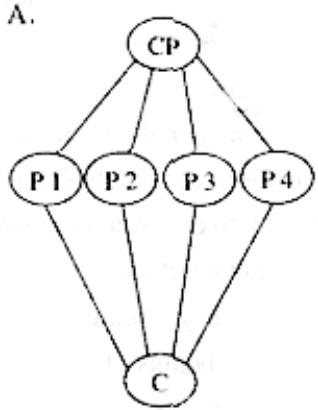
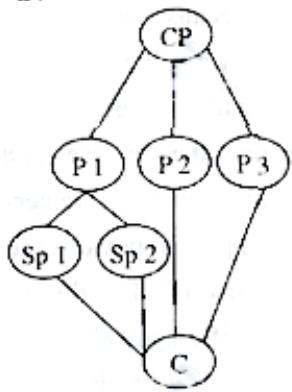
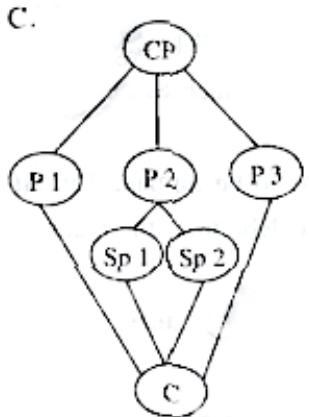
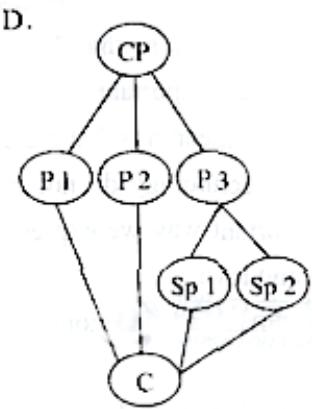
67. Which of the following shows the organization of the passage?

B.

CP: Central Point P: Point SP: Sub-point(次要点) C: Conclusion D

When students and parents are asked to rate subjects according to their importance, the arts are unavoidably at the bottom of the list. Music is nice, people seem to say, but not important. Too often it is viewed as mere entertainment, but certainly not an education priority(优先). This view is shortsighted. In fact, music education is beneficial and important for all students.

Music tells us who we are. Because music is an expression of the beings who create it, it reflects their thinking and values, as well ad the social environment it came influence that George Gershwin and other musicians introduced into their music is obviously American because it came from American musical traditions. Music expresses our character and values. It gives us identity as a society.

Music provides a kind of perception(感知)that cannot be acquired any other way. Science can explain how the sun rises and sets. The arts explore the emotive(情感的)meaning of the same phenomenon. We need every possible way to discover and respond to our world for one simple but powerful reason: No one way can get it all.

The arts are forms of thought as powerful in what they communicate as mathematical and scientific symbols. They are ways we human beings “talk” to each other. They are the language of civilization through which we express our fears, our curiosities, our hungers, our discoveries, our hopes. The arts are ways we give form to our ideas and imagination so that they can be shared with others. When we do not give children access to an important way of expressing themselves such as music, we take away from them the meanings that music expresses.

Science and technology do not tell us what it means to be human. The arts do. Music is an important way we express human suffering, celebration, the meaning and value of peace and love.

So music education is far more necessary than people seem to realize.

Answer key

C

继续浏览